
Table of Contents
- What an HVAC Inspection Checklist Includes and Why It Matters
- Core Components of an HVAC Inspection Checklist
- Detailed Inspection Procedures for HVAC Systems
- Preparing for Your HVAC Inspection and Maintaining Year-Round Efficiency
- Advanced Diagnostics and Professional Assessment Techniques
- Frequently Asked Questions About HVAC Inspections
- Take Charge of Your HVAC System’s Health with Routine Inspections
What an HVAC Inspection Checklist Includes and Why It Matters
An HVAC inspection covers several critical components to ensure your system runs safely and efficiently. A thorough HVAC inspection checklist in Eagle Rock provides homeowners with a structured way to catch small issues before they become major problems.
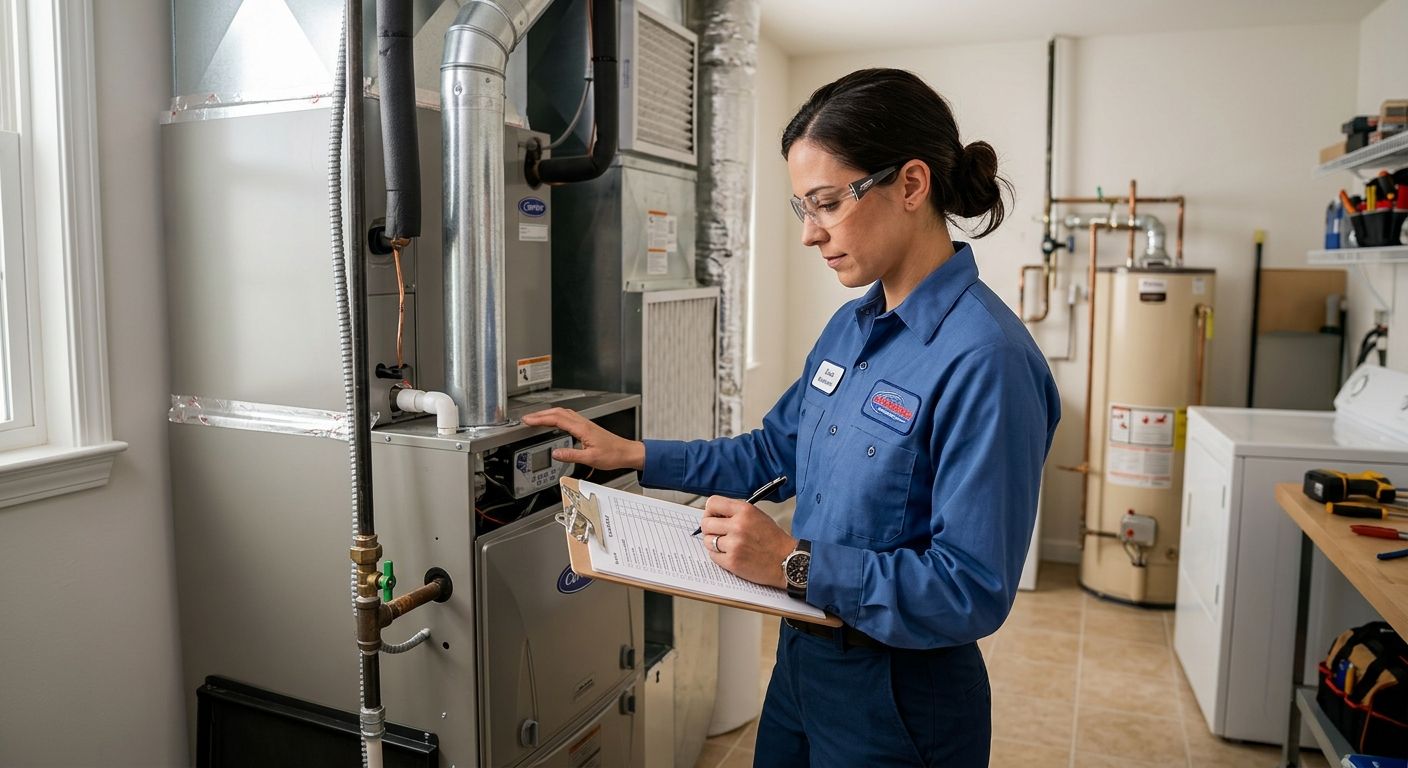
The inspection typically begins with thermostat calibration to confirm accurate temperature readings and proper cycling. Next, technicians check the air filter; a clogged filter restricts airflow and should be replaced every one to three months. Cleaning the evaporator coil and condenser coil removes dirt that reduces efficiency—evaporator coil cleaning prevents airflow issues and ice buildup. A crucial safety step is the furnace heat exchanger inspection, which looks for cracks that could leak carbon monoxide. Technicians also inspect electrical connections and safety controls to prevent hazards, verify refrigerant charge and detect leaks, and test the blower motor and fan for proper airflow throughout the home.
Regular inspections can improve energy efficiency by 5–15% and may extend the system’s lifespan. A well-maintained system also delivers more consistent comfort and lower monthly utility bills. They also catch small issues before they become costly emergency repairs. Eagle Rock Prestige HVAC tailors its HVAC inspection checklist to the local climate, ensuring that homes in Eagle Rock and surrounding areas receive the most relevant checks.
For a complete inspection, consider professional HVAC services in Eagle Rock. Now that you know what the checklist includes, the following section will guide you on how to prepare for an HVAC inspection.
Core Components of an HVAC Inspection Checklist
A comprehensive hvac inspection checklist covers the vital components that keep residential heating and cooling systems operating safely and at peak efficiency. For homeowners in Eagle Rock, a fall inspection is the perfect time to ensure the furnace is ready for winter while giving the air conditioner a thorough post-summer checkup. The following components form the backbone of a professional maintenance visit.
Furnace Heat Exchanger Inspection
The furnace heat exchanger inspection is a critical safety check. Technicians examine for cracks, rust, or leaks that could release carbon monoxide. Annual service, as recommended by Eagle Rock Prestige HVAC, includes this detailed evaluation plus verification that gas connections, carbon monoxide detectors, and safety controls are working properly.
Evaporator Coil Cleaning
Dirty evaporator coils reduce cooling efficiency and strain the system. A fall inspection includes cleaning coils to remove built-up dirt and debris. Eagle Rock Prestige HVAC advises that evaporator coil cleaning during seasonal AC maintenance prevents mold growth and keeps the unit ready for next summer, lowering the likelihood of expensive repairs.
Refrigerant Level and Leak Check
Proper refrigerant levels are key to effective cooling. Technicians check the charge and search for leaks using methods such as visual inspection for oil stains, electronic leak detectors, and bubble testing, as detailed in Eagle Rock Prestige HVAC’s leak detection guide. Detecting a leak early prevents compressor damage and restores performance.
Thermostat Calibration
A well-calibrated thermostat ensures the system runs only when needed. The inspector verifies that temperature readings are accurate and that the thermostat communicates correctly with the furnace and air conditioner. This step helps avoid comfort swings and unnecessary cycling, conserving energy.
Air Filter and Ductwork Inspection
Airflow problems often trace back to clogged filters or blocked ducts. The inspection includes replacing or cleaning the air filter and visually checking accessible ductwork for leaks or excessive dust. Maintaining clean filters—ideally every 30 to 90 days—supports efficient heating and cooling and better indoor air quality.
The infographic below summarizes these inspection areas, grouping them into safety and integrity checks and efficiency and airflow measures.

Professional HVAC inspection checklist infographic with safety and efficiency components.
A professional inspection goes beyond a checklist—it thoroughly evaluates every component for early signs of trouble. When heat exchangers, coils, and ductwork are carefully assessed, small problems can be fixed before they grow. Regular inspections in Eagle Rock help prevent breakdowns, extend equipment life, and control energy costs, offering peace of mind throughout the seasons.
When you schedule service with a local HVAC contractor in Eagle Rock who follows a detailed hvac inspection checklist, you can trust that your heating and cooling systems will operate reliably, safely, and efficiently throughout every season.
Detailed Inspection Procedures for HVAC Systems
Having covered the general overview of HVAC inspections, let’s dive into the specific procedures for each component. For homeowners in Eagle Rock, following a detailed hvac inspection checklist helps you understand what professionals look for when they evaluate your system’s health.
Inspecting the Evaporator Coil and Condenser
Start by visually examining the evaporator coil for dirt, debris, or ice buildup. A coated coil cannot absorb heat efficiently, so look for frost on the coil surface and inspect the insulation on the refrigerant lines for signs of wear. Light dust can be removed with a soft brush or low-pressure compressed air, but if you see heavy accumulation or ice, stop and call a professional. Warning: Never use sharp objects on the fins; they damage easily.
Move to the outdoor condenser unit. Clear away leaves, grass clippings, and any vegetation that has grown within two feet of the cabinet—this ensures proper airflow. Check the condenser coil for mud or fibers that can clog the fins. According to AHRI standards, restricted airflow lowers energy efficiency and increases strain on the compressor. When a coil requires evaporator coil cleaning beyond a simple rinse, a qualified technician should perform the work using commercial coil cleaners that won’t corrode metals. Regular attention to both coils keeps your system running within manufacturer specifications.
Evaluating the Furnace Heat Exchanger for Cracks
The furnace heat exchanger is a critical safety component; it separates combustion gases from the air you breathe. Only a licensed technician should look for cracks because the inspection requires specialized tools such as boroscopes and combustion analyzers, and a compromised exchanger poses a carbon monoxide risk. Warning: Never attempt to open a sealed furnace cabinet or inspect the heat exchanger yourself.
Be aware of warning signs that indicate a possible crack: soot buildup on or around the furnace, unusual odors that resemble formaldehyde, a flickering or yellow burner flame rather than a steady blue one, and frequent activation of carbon monoxide detectors. According to Eagle Rock Prestige HVAC, annual furnace servicing that includes a furnace heat exchanger inspection is the best way to catch deterioration early. ASHRAE guidelines also stress that heat exchangers should be examined at least once a year due to the lethal consequences of CO leakage. If your technician finds a crack, the unit must be replaced immediately—there is no safe repair.
For a comprehensive guide on preparing your system for cooler weather, refer to our fall HVAC maintenance tips.
A quick look at the different inspection priorities clarifies why each component demands a unique approach.
| Component | Function | Inspection Focus | Common Signs of Trouble | Recommended Action |
|---|---|---|---|---|
| Evaporator Coil | Absorbs heat from indoor air | Cleanliness, refrigerant temperature, frost/ice buildup | Warm air from vents, higher energy bills, ice on coil | Professional cleaning; repair leaks if present |
| Furnace Heat Exchanger | Transfers heat from combustion to air | Cracks, rust, corrosion, carbon monoxide leakage | Unusual odors, soot, yellow burner flame, CO alarm | Immediate professional evaluation; replacement if cracked |
Both components sit at the center of safe, efficient comfort, but the stakes are higher with the heat exchanger because failure can lead to carbon monoxide poisoning while an underperforming coil mainly hurts your wallet.
Checking Electrical Connections and Refrigerant Levels
During a thorough inspection, a technician will tighten all electrical connections and look for signs of overheating such as discolored wires or melting insulation. Capacitors should be checked for bulging or leaking oil, both of which signal an impending failure. Loose wiring and failing capacitors cause hard starts and voltage drops that can damage the compressor. Homeowners can watch for flickering lights when the system kicks on or hear a clicking sound as clues that electrical trouble is developing, but only a professional should open the service panel.
Refrigerant pressure must be measured with a gauge set, a task reserved for EPA-certified technicians under the Clean Air Act. Low refrigerant almost always points to a leak. Eagle Rock Prestige HVAC details several professional detection methods, including electronic leak detectors and fluorescent dye, to locate the source. If you suspect a leak because your air is not cooling adequately, resist the urge to add refrigerant yourself—illegal and short-sighted. A technician will repair the leak, evacuate the system, and recharge it to the exact manufacturer specification, restoring efficiency and protecting the compressor. ASHRAE recommends that refrigerant levels be verified at least during the annual maintenance visit to catch small losses before they become large problems.
With a thorough inspection completed, you can now focus on necessary repairs or schedule professional maintenance to keep your system operating at peak performance.
Preparing for Your HVAC Inspection and Maintaining Year-Round Efficiency
After understanding what a professional HVAC inspection covers, it’s time to prepare your home and establish year-round efficiency habits. Following a thorough hvac inspection checklist helps Eagle Rock homeowners keep their systems in top shape.
Steps to Prepare for Your HVAC Inspection
Before a technician arrives, a few simple tasks make the inspection more effective: clear a two-foot perimeter around the outdoor condenser, replace air filters with the correct size and MERV rating, verify thermostat accuracy against a room thermometer, note any banging or musty odors, and ensure all supply and return vents are unobstructed. The table below shows how these DIY steps compare with a professional inspection.
| Aspect | DIY Inspection | Professional Inspection | Benefit |
|---|---|---|---|
| Air Filter Replacement | Check and replace monthly/quarterly | Assess filter slot fit, recommend best MERV rating | Improved air quality and system efficiency |
| Thermostat Calibration | Compare set temperature with room thermometer | Precise calibration, upgrade to smart thermostat | Accurate temperature control, energy savings |
| Visual Inspection of Units | Clean outdoor unit, remove debris | Check electrical connections, coil cleanliness, refrigerant lines | Identify hidden issues before they cause breakdowns |
| Safety Checks | Check for unusual noises, smells | Carbon monoxide testing, heat exchanger inspection, gas line check | Protection from CO leaks and fire hazards |
Professional inspections address hidden hazards such as a cracked heat exchanger or a refrigerant leak, protecting your home and extending system life.
Seasonal Maintenance Practices for Peak Performance
In Eagle Rock, the mild coastal climate reduces strain on air conditioning but still allows dust and pollen to accumulate on components. Annual evaporator coil cleaning is essential to remove that buildup; according to our seasonal guides, a dirty coil can foster mold, block the condensate drain, and reduce cooling capacity. Pair a professional coil cleaning with a condenser check to clear debris from fins and lubricate the fan motor, keeping your outdoor unit ready for the first warm day. Before summer arrives, replace your filters and consider a full system tune-up that catches minor wear and verifies refrigerant charge.
As cooler weather approaches, shift your focus to heating components. Schedule a furnace tune-up that includes a thorough furnace heat exchanger inspection—our fall maintenance checklist emphasizes that even a small crack can release carbon monoxide into your home. Test your smoke and carbon monoxide detectors at the same time.
Following the Energy Star program guidelines helps maximize seasonal performance. ENERGY STAR recommends changing your filter every 90 days—or monthly if you have pets or allergies—and setting your thermostat back 7° to 10°F when you are asleep or away. Even in Eagle Rock’s moderate climate, regular filter changes are critical because the heating system runs frequently, and a clogged filter forces the equipment to work harder. Refrigerant checks, gas line inspections, and electrical testing should always be left to a licensed technician.
The Value of Professional Maintenance Plans
Enrolling in a professional maintenance plan brings peace of mind and long-term savings. With a plan, you receive priority scheduling for emergency repairs, discounted seasonal tune-ups, and documented service history that tracks your system’s health over time. Twice-annual inspections catch minor wear—such as a loose electrical connection or a slowly leaking coil—before they escalate into a costly breakdown. A well-maintained system also runs more efficiently, which helps extend equipment life and keeps utility bills in check. For Eagle Rock homeowners, a tailored maintenance agreement ensures that your HVAC gets the attention it needs, exactly when it needs it, without the worry of forgetting a seasonal appointment.
Advanced Diagnostics and Professional Assessment Techniques
While a basic hvac inspection checklist covers the essentials, professional HVAC inspections in Eagle Rock go further. Technicians incorporate advanced diagnostic techniques—thermal imaging, airflow measurement, refrigerant analysis—to uncover subtle problems that would otherwise remain undetected, protecting the system’s longevity.
The table below compares the core diagnostic methods and their applications.
| Technique | Purpose | Typical Use Case | Equipment Needed |
|---|---|---|---|
| Visual Inspection | Identify obvious damage, wear, dirt | Every standard inspection | Flashlight, mirror, basic tools |
| Thermal Imaging | Detect temperature anomalies, insulation gaps, electrical hotspots | Troubleshooting refrigerant issues, duct leaks | Infrared camera |
| Airflow Measurement | Verify CFM across supply/return vents | Balancing system, checking duct restrictions | Anemometer, flow hood |
| Refrigerant Analysis | Measure superheat/subcooling, detect contamination | AC performance issues, suspected leak | Manifold gauge set, thermometer |
Visual inspection, the most foundational technique, involves examining accessible components with a flashlight and mirror. A key part is checking for dirt that signals evaporator coil cleaning is overdue, as a fouled coil can drop efficiency by up to 30 percent. Thermal imaging adds an infrared dimension, mapping temperature differences to find duct leaks, failing motors, or electrical hotspots. For critical safety, a furnace heat exchanger inspection relies on thermal cameras to detect cracks that could release carbon monoxide. Airflow measurement with an anemometer or flow hood verifies that each register delivers the correct CFM; low readings often point to duct blockages. Refrigerant analysis, performed with manifold gauges, measures superheat and subcooling to detect charge issues or contamination, as discussed in Eagle Rock Prestige HVAC’s guide to refrigerant leak detection. All these diagnostic techniques adhere to ASHRAE standards, and technicians with AHRI HVAC certification have proven their ability to apply them accurately.
By investing in advanced diagnostics, homeowners gain precise insight into their system’s health and can avoid unnecessary repairs.
Frequently Asked Questions About HVAC Inspections
Still have questions? Our FAQ section addresses common concerns.
How often should I schedule an HVAC inspection?
Our technicians suggest an annual inspection in early fall in Eagle Rock to prepare for heating season. While most systems do well with yearly checks, older units or heavy use may benefit from seasonal tune-ups. Regular maintenance helps catch small issues before they become costly repairs.
What does a standard HVAC inspection checklist include?
A typical checklist covers furnace heat exchanger inspection for cracks, evaporator coil cleaning for efficiency, and thermostat calibration. Our team also checks electrical connections, drain lines, and airflow, though exact tasks may vary by system type.
If you notice unusual noises, uneven temperatures, or higher bills, contact our team for an inspection.
Take Charge of Your HVAC System’s Health with Routine Inspections
Take charge of your HVAC system’s health with a comprehensive hvac inspection checklist. Routine inspections can help extend your system’s lifespan, improve energy efficiency, and prevent costly breakdowns.
A thorough checklist should include tasks such as evaporator coil cleaning and furnace heat exchanger inspection. Adhering to ASHRAE standards ensures your inspection meets recognized industry benchmarks for thoroughness and safety.
Homeowners in Eagle Rock and surrounding areas can schedule their inspections with Eagle Rock Prestige HVAC, a trusted local provider. Regular checkups also help you avoid emergency repairs and lower energy bills. For peace of mind, consider booking a professional inspection today.