

Table of Contents
- Maximizing LADWP Heat Pump Rebates for Eagle Rock Homeowners
- LADWP Heat Pump Rebate Per Ton for Eagle Rock Homes
- How SEER2 and HSPF2 Ratings Unlock Maximum LADWP Rebates
- Stacking LADWP Rebates with Federal Tax Credits for Maximum Savings
- Advanced Requirements for Maximum LADWP Heat Pump Rebates and Efficiency Gains
- Common Questions About LADWP Heat Pump Rebate Per Ton for Eagle Rock
- Next Steps to Claim Your LADWP Heat Pump Rebate with Eagle Rock Prestige HVAC
Maximizing LADWP Heat Pump Rebates for Eagle Rock Homeowners
The rebate the LADWP offers per ton of heat pump capacity is attracting homeowners in Eagle Rock to switch to electric heat pumps. Homeowners in the 90041 ZIP code who get their power from LADWP are eligible for the rebate. The rebate is offered on a per-ton basis for the heating and cooling capacity, and a larger system would mean a larger rebate. Systems can be designed for any space, including unusual or odd-shaped spaces, using ductless mini-split heat pumps.
Eagle Rock Prestige HVAC, which is located on Colorado Boulevard, installs ductless mini-split heat pumps per LADWP specifications. Their ductless mini-split heat pump installation helps homeowners in Eagle Rock qualify for the rebate, and the utility calculates the rebate per ton after the system is installed. In order for a heat pump to qualify for the rebate, it must be able to meet certain thresholds of energy efficiency. The company’s licensed technicians make sure each installation meets those standards. Because LADWP’s per-ton rebate incentivizes the addition of more zones to a heat pump system, homeowners understand that adding a multi-zone system would mean a larger rebate.
LADWP Heat Pump Rebate Per Ton for Eagle Rock Homes
Eagle Rock homeowners researching the LADWP heat pump rebate per ton learn about a sliding scale where homeowners receive more money for a more efficient system. The LADWP heat pump rebate is calculated by the rated cooling capacity in tons, so the total rebate is directly related to the size of the system. Homeowners understand this structure to estimate how much they will be rebated before purchasing the equipment.
Published LADWP rebate tiers divide heat pumps into standard, high-efficiency, and premium categories. To qualify for a higher rebate tier, equipment must meet minimum SEER2 cooling and HSPF2 heating efficiency ratings. Among the high-efficiency systems, the highest per-ton rebate is given to variable capacity units. Single-speed systems receive a lower per-ton rebate. Two-speed and variable capacity systems (which also offer better energy savings and comfort) are rebated more than single-speed systems. LADWP revises its rebate tiers and incentives, so the per-ton rebate amounts and thresholds should be verified at the time of the consultation. Estimates based on LADWP published rates; verify current amounts at time of consultation.
For most homes in Eagle Rock, residential heat pump installations fall between 2 and 4 tons, depending on square footage, insulation, window orientation, and local climate factors. A typical 3-ton system, for example, would generate a total rebate of 3 multiplied by the applicable per-ton amount. Using that straightforward formula, homeowners can quickly approximate their rebate while they explore equipment options. The actual tonnage needed, however, can only be determined through a professional Manual J load calculation.
Our team at Eagle Rock Prestige HVAC performs on-site load calculations that account for every detail of the home’s thermal envelope. Proper sizing ensures the system qualifies for the intended rebate tier and avoids efficiency losses from an oversized or undersized unit. During a consultation, we review the current LADWP program requirements, match eligible heat pump models to the home’s calculated load, and provide a written estimate of the rebate. This step removes the guesswork and ensures the homeowner can take full advantage of the per-ton incentive.
The next step in maximizing the potential rebate is analyzing the efficiency metrics of the heat pump, SEER2 and HSPF2, in more depth. The numbers that define each tier’s performance threshold explain the reasoning for a variable capacity system being able to provide a larger rebate.
How SEER2 and HSPF2 Ratings Unlock Maximum LADWP Rebates
The bottom line after you have factored in LADWP payments per ton for a heat pump is the system’s efficiency rating. A system’s rating can be one or two points higher on the SEER2 or HSPF2 scale and you move from the standard rebate to the highest payment per ton. SEER2 and HSPF2 are updated 2023 Federal Test Procedure ratings. Equipment labels are measured differently than older SEER and HSPF values.
SEER2 and HSPF2 Requirements for the Highest Rebate Per Ton
LADWP’s current published requirements set a top-tier cutoff that unlocks the highest per-ton incentive. As of the utility’s schedule, the maximum rebate per ton typically requires a minimum SEER2 of 20 and an HSPF2 of 10 — figures you should verify against the latest program terms because they can change.
A heat pump rated at 18 SEER2 and 9 HSPF2 would fall within standard rebate tiers, and a heat pump with a rating of 20 SEER2 and 10 HSPF2 would fall within the highest rebate tiers. This is approximately a $300 – $500 per ton difference.
| System Type | Typical SEER2 Range | Typical HSPF2 Range | Estimated Rebate per Ton | Key Eligibility Notes |
|---|---|---|---|---|
| Ductless Mini-Split | 20–24 | 9–12 | $500–$1,000 | Higher per-ton rate potential; per-zone sizing; requires licensed installation and permits |
| Central Heat Pump | 16–20 | 7.5–9 | $200–$500 | Matching indoor coil required; duct system condition matters; still eligible when ratings clear the high-efficiency cutoff |
Ductless mini-split heat pumps are often within this efficiency range, but central heat pumps may require more careful consideration to reach the same efficiency range. Choosing between central and ductless heat pumps may impact the rebate difference by hundreds of dollars per ton.
Do Ductless Mini-Split Systems Qualify for Higher Rebate Rates?
Ductless mini-splits receive higher rebate rates per ton because their design tends to push SEER2 and HSPF2 numbers into higher tiers. Designs common in systems the company installs help explain this: use of inverter-driven compressors, per-zone temperature controls, and smaller indoor units. These designs help improve system efficiency and reduce duct losses.
These systems routinely achieve SEER2 ratings above 20 and HSPF2 ratings above 10. Since these are the thresholds that help unlock the maximum per-ton rebates from LADWP, these ratings translate to increased rebates. For an Eagle Rock homeowner considering a central heat pump system versus a ductless system, when ductless is installed properly and with the right permits, the combined rebate and efficiency edge make ductless a strong competitor.
How System Type Influences Rebate Eligibility and Payout
LADWP’s heat pump rebate covers ductless, central and multi-zone systems. However, payouts per-ton can be different by equipment class. Multi-zone ductless systems and single-zone ductless systems can qualify for the same top-tier rebate, as they both contain inverter compressor technology. However, how LADWP classifies a multi-zone outdoor unit can impact the payout per-ton.
All central systems require an efficient outdoor unit to meet required SEER2/HSPF2 to qualify for a rebate. In addition, the condition of the home’s ductwork can impact delivered efficiency. These aren’t considerations for ductless systems. In every case, the installation must be licensed, the equipment properly sized and the correct permits obtained to qualify for the rebate.
Clearing the efficiency cutoff is the most predictable way to qualify for the highest incentive, and other incentives become more impactful when layered with a greater base rebate.
Stacking LADWP Rebates with Federal Tax Credits for Maximum Savings
After confirming that your new heat pump meets the efficiency benchmarks that unlock LADWP’s per-ton rebate, the next lever is pairing that utility incentive with the federal energy tax credit.
How to Stack LADWP Rebates with the Federal Energy Efficient Home Improvement Credit
The LADWP Heat Pump Rebate and the Federal Energy Efficient Home Improvement Credit (Section 25C) are separate programs and may be claimed together when project requirements are met. LADWP structures its incentive as a per-ton rebate tied to installed equipment efficiency, while the federal credit is a percentage-based credit claimed on your annual federal return.
A practical order of operations is:
- Complete the installation with a licensed contractor and pay for equipment and labor.
- Submit the LADWP rebate application with required supporting documents.
- Claim the federal credit on IRS Form 5695 when you file that year’s return.
Keep these documents to support both claims:
- AHRI certificate showing SEER2 and HSPF2 values
- ENERGY STAR certification for the installed model
- Itemized contractor invoice separating equipment and labor
- Manufacturer model and serial numbers
- LADWP utility account number
Both incentives are subject to program caps and annual limits, and program rules generally prevent combined incentives from exceeding your out-of-pocket expense.
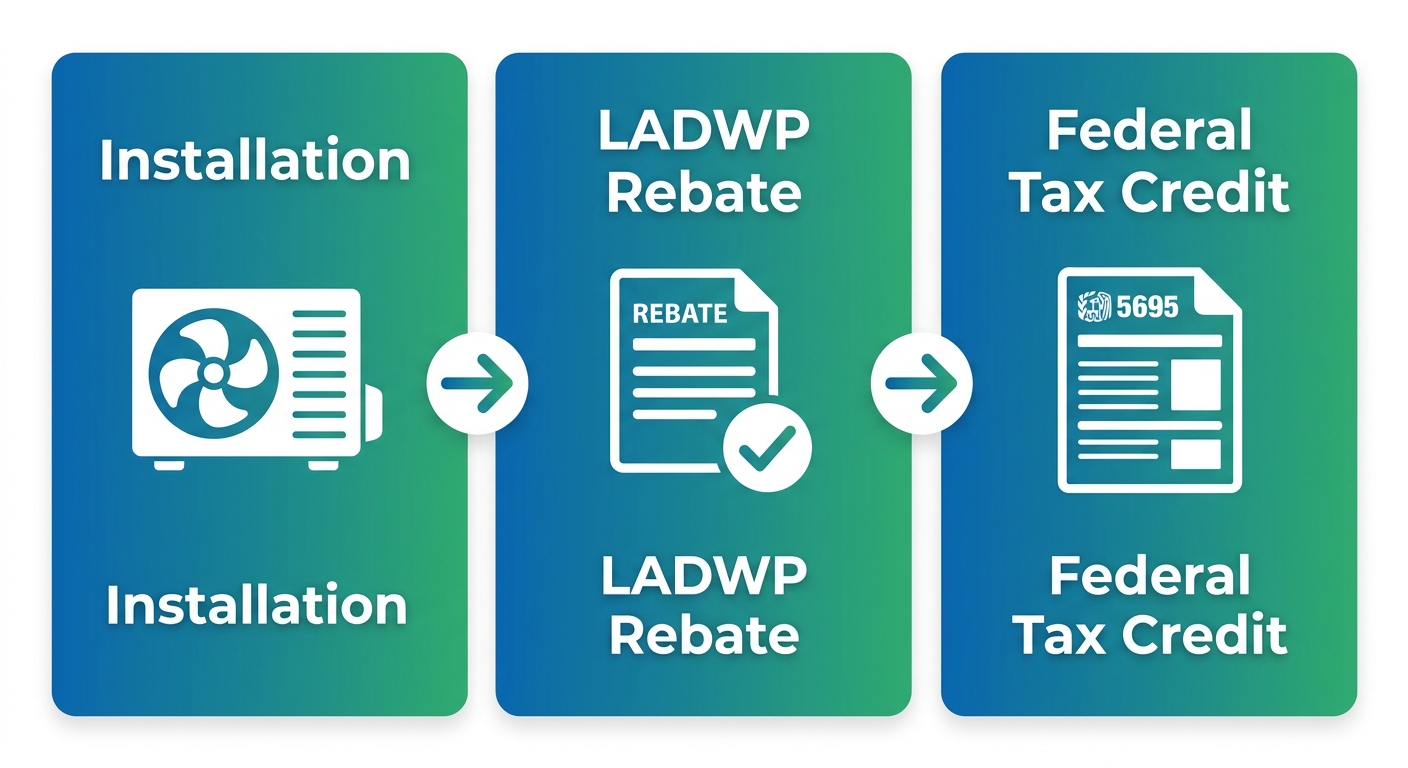
Stack LADWP rebates with federal tax credits.
Choosing a Heat Pump System to Maximize Combined Incentives
Single-stage, variable-speed, and ductless mini-split systems can all qualify, but which configuration reaches the highest combined incentive depends on measured efficiency. Variable-speed heat pumps and ductless mini-splits often perform better at part-load conditions, making them strong candidates for top rebate and credit tiers.
Mini-split installations also avoid duct losses, which helps them meet stringent SEER2 and HSPF2 benchmarks rewarded by both programs.
| Incentive Program | Credit/Rebate per Ton (Approx.) | Key Eligibility Criteria | Stacking Notes |
|---|---|---|---|
| LADWP Heat Pump Rebate | Approx. per-ton rebate (Approx.) | AHRI-certified high-efficiency equipment installed by a licensed contractor | Rebate is applied post-installation; separate application from federal credit |
| Federal Energy Efficient Home Improvement Credit (25C) | Up to a percentage of qualifying costs (Approx.) | ENERGY STAR certification; meets SEER2/HSPF2 thresholds | Claimed on annual tax return via IRS Form 5695 |
| Combined per-ton incentive | Sum of rebate and credit (Approx.) | Both programs’ requirements must be satisfied | Total incentives cannot exceed out-of-pocket cost; verify current figures |
Note: All figures labeled “Approx.” and program amounts are subject to change; verify current rules before applying.
Eagle Rock Installation Factors and Prestige HVAC’s Role
Local compliance and utility coordination are part of a rebate-ready installation in Eagle Rock. Most projects need a permit from the Los Angeles Department of Building and Safety, and some homes require electrical service coordination with LADWP for panel or service upgrades.
Eagle Rock Prestige HVAC’s licensed technicians support homeowners by performing an energy assessment to confirm correct sizing, providing duct sealing where needed, and assembling the AHRI, ENERGY STAR, and invoice documentation both programs require. Typical workflow:
- Site assessment and load calculation
- Permitting and utility coordination
- Installation, testing, and assembly of the rebate documentation folder
For Eagle Rock homeowners, the final step is a brief assessment to determine which system and incentive combination fits your home and to confirm eligibility under current program rules.
Advanced Requirements for Maximum LADWP Heat Pump Rebates and Efficiency Gains
Earning the highest LADWP heat pump rebate per ton in Eagle Rock depends on clearing the strict efficiency bars that LADWP publishes for its heat pump program. Stacking those top-tier utility dollars with available federal tax credits can materially reduce the installed cost, but only if the equipment clears both cooling and heating performance thresholds.
LADWP tiers their heat pump incentives. The highest per ton rebate is offered when the heat pump meets a LADWP defined SEER2 and HSPF2. Meeting just one of these metrics does not qualify homeowners for the highest per ton rebate. In order to meet both, homeowners should confirm with LADWP the defined SEER2 and HSPF2 for the program year, as these metrics are revised.
On top of efficiency requirements, LADWP has other program requirements before the highest per ton rebate is approved, such as,
- installation by a licensed contractor
- equipment listed on LADWP’s approved product list
- a proper load calculation and correct system sizing
- duct-sealing verification for ducted systems
- per-ton and per-system caps, with funding availability subject to LADWP review
These conditions are part of LADWP’s review process, so a high-efficiency unit alone does not guarantee the maximum rebate.
Ductless mini-split systems often carry a higher HSPF2 requirement than ducted heat pumps for the top tier. The company’s mini-split and ductless installation service helps Eagle Rock homeowners select and install equipment that can meet that bar, while the company’s licensed technicians perform the load calculation and sizing LADWP expects. Homeowners whose current equipment falls short of the top thresholds can use the company’s heating system upgrade and design consultation services rather than attempting equipment changes themselves. A consultation is the practical next step to confirm which tier a specific home may reach under the current LADWP terms.
Common Questions About LADWP Heat Pump Rebate Per Ton for Eagle Rock
What is the per-ton rebate? Are ductless mini-splits eligible?
How is the per-ton rebate calculated?
It is based on the system’s rated capacity in tons. The per-ton rate is established by LADWP’s program terms and may change. Our staff verifies the per-ton rate for you at the time of your consultation.
Do ductless mini-split systems qualify?
Ductless mini-split heat pumps are eligible if installed by a licensed contractor or our licensed technicians.
What determines eligibility and paperwork?
We serve as your contractor to provide the following rebate-related services: verification, documentation, submission, and assistance with follow-up for rebate claims for existing homes in Eagle Rock. As your contractor, we will help gather the documentation and submit it for the rebate.
Make an appointment to find out the per-ton rate and initiate the rebate process.
Next Steps to Claim Your LADWP Heat Pump Rebate with Eagle Rock Prestige HVAC
The LADWP heat pump rebate per ton can make upgrading your Eagle Rock home more affordable. The final rebate amount depends on system tonnage and current LADWP terms.
Verify the latest rebate details directly with LADWP before scheduling work. Contact the company for a home assessment and accurate sizing. We offer mini-split and ductless heat pump installation for homes without ductwork. Professional installation helps ensure your system meets program requirements and runs efficiently.
Contact Eagle Rock Prestige HVAC today.
Start Maximizing Your LADWP Rebate
Now that you understand how LADWP’s heat pump rebate per ton works and how efficiency ratings and federal tax credits can stack, the next step is to see exactly what your home in Eagle Rock qualifies for. Each installation is unique, and a professional load calculation is critical to accessing the highest per-ton rebate. the company’s licensed technicians can assess your property, recommend a qualifying ductless mini-split system, and handle the LADWP paperwork on your behalf. To get a personalized estimate of the rebate you may receive, call (818) 732-8552 or use the online contact form to schedule a consultation. Your more efficient, cost-saving heat pump upgrade begins with one expert assessment.